
01
Taste and coffee presence
Compare how clearly the coffee base comes through, then separate concentration from bitterness, roast character, and sweetness. A smaller or bolder-tasting cup is not automatically more caffeinated.
Independent coffee comparison guide
Compare coffee drinks by taste, coffee strength, milk, foam, caffeine, and calories. CoffeeVS uses reviewed typical recipes and explains where café size, shot count, or house style can change the answer.
Start with Cappuccino vs Latte, or choose any two of the 20 reviewed coffee drinks in the launch collection.


Side-by-side guide
Compare typical café recipes. Exact ingredients, shot counts, and serving sizes still vary by shop.

Bold and airy
Espresso stays present beneath a light, foamy finish.
Mild and creamy
More milk softens the espresso and creates a rounder sip.
Balanced
A typical recipe uses similar shares of espresso, milk, and foam.
Milk-forward
Uses more steamed milk than a cappuccino in a typical recipe.
Thick cap
The foam layer is a defining part of the drink.
Thin microfoam
A silky surface supports latte art without a thick cap.
Shot-dependent
Often made with one espresso shot; café recipes vary.
Shot-dependent
Similar to a cappuccino when both use the same shot count.
Serving-dependent
Milk choice, cup size, and additions change the total.
Serving-dependent
Often higher in a larger milk serving, but recipes vary.
A better coffee comparison
Coffee menus compress recipes into short names. That is convenient at the counter, but it hides the decisions that shape the cup: brewing method, coffee dose, water, milk, aeration, serving size, and optional additions.
CoffeeVS turns those hidden decisions into a consistent coffee drink comparison. You can see why two drinks taste different, which uncertainty matters, and what to ask before ordering when a precise number is important.
Compare how clearly the coffee base comes through, then separate concentration from bitterness, roast character, and sweetness. A smaller or bolder-tasting cup is not automatically more caffeinated.
Milk volume changes flavor and serving size, while the way milk is steamed changes body. CoffeeVS distinguishes liquid milk, glossy microfoam, warm milk, cream, and optional dairy additions.
A thick cappuccino cap, integrated flat-white microfoam, a small macchiato mark, and a nitrogen head create different drinking experiences. Foam is treated as structure, not decoration.
Shot count, coffee dose, brew ratio, concentrate dilution, and serving size matter. We avoid one-number comparisons until the drink version and serving are clear enough to support them.
Black coffee starts simply, but milk type, cup size, chocolate, syrup, cream, and toppings change the total. Our guides explain the variables instead of presenting false precision.
High-intent coffee comparisons
Begin with a familiar pair. Each reviewed guide gives the quick difference first, then explains recipe structure, texture, caffeine context, calories, and which drink fits a preference.
 Cappuccino vs LatteA cappuccino is foamier and keeps more espresso presence; a latte uses more steamed milk for a milder, creamier cup.
 Macchiato vs LatteA traditional macchiato is espresso with only a mark of milk; a latte is a much larger, milk-forward drink.
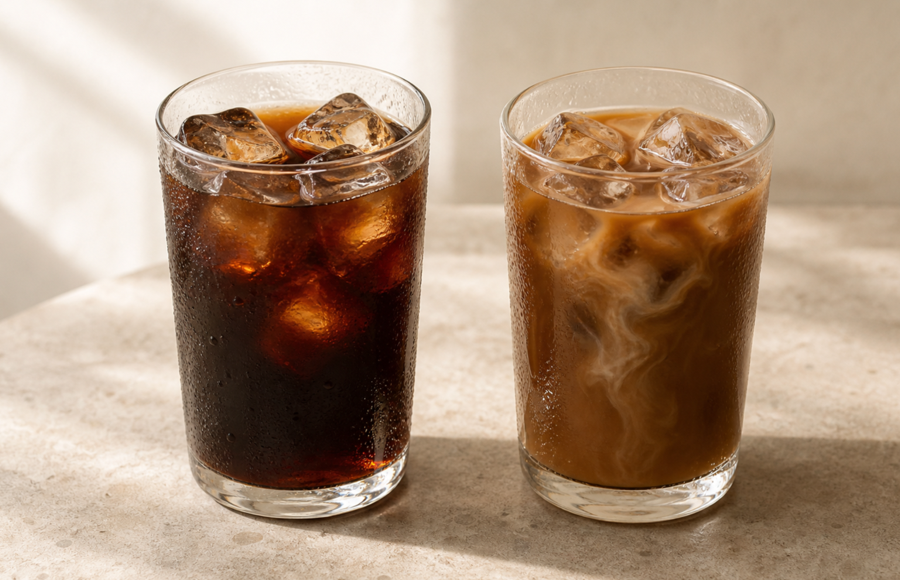 Cold Brew vs Iced CoffeeCold brew is extracted cold over many hours; iced coffee is hot-brewed coffee cooled and poured over ice.
Browse coffee drinks
A useful coffee comparison starts by identifying the base method. Espresso, brewed coffee, cold extraction, milk texture, and blending create different decision paths.
Explore all 20 coffee drinks7 reviewed guides
Concentrated and direct
Espresso drinks begin with pressure-brewed coffee. The useful comparison is not simply which cup looks smaller, but how dose, water, extraction time, and any added milk change concentration and texture.
7 reviewed guides
Texture changes the cup
Milk coffees can share the same espresso base while tasting very different. Milk volume, temperature, aeration, foam depth, and cup size decide whether the result feels bold, silky, airy, or dessert-like.
2 reviewed guides
Longer, aromatic servings
Brewed coffee uses water and time differently from espresso. Filter method, grind, ratio, and serving size shape the cup, so a larger drink is not automatically weaker or lower in caffeine.
3 reviewed guides
Temperature is only the beginning
Cold coffee may be brewed hot and chilled, extracted slowly in cool water, or infused with nitrogen. Those methods create different acidity, dilution, body, and caffeine contexts even when every drink is served over ice.
1 reviewed guides
Recipe-led and highly variable
Blended coffee-style drinks combine ice, milk, coffee or coffee flavor, and optional syrups or toppings. Their identity depends more on the complete recipe than on a fixed espresso-and-milk ratio.
How to compare coffee drinks
01
Select two drinks you are actually deciding between. CoffeeVS maps familiar aliases to reviewed drink entities so reverse searches and spelling variations do not create conflicting pages.
02
The answer appears before the long explanation. See the defining recipe contrast and a conditional recommendation, then use the detailed sections only when taste, milk, caffeine, or calories affect the decision.
03
Confirm cup size, shot count, milk, sweetness, and brand recipe when exact nutrition or caffeine matters. The guide explains a common convention; the café controls the drink it actually serves.
Coffee comparison methodology
Each guide starts with the stable idea of the drink: its coffee base, typical ingredients, preparation, and texture. A number is useful only after the version and serving are specific enough to support it.
CoffeeVS does not label one drink universally better, healthier, stronger, or lower calorie. Recommendations are tied to preferences and recipe conditions so the reasoning remains visible.
Sources support definitions, preparation conventions, and version-specific values. They are not collected as an unrelated link list, and a branded recipe is never silently converted into a universal standard.
Canonical coffee comparison pages are limited to pairs with a clear search intent and enough independent value. Other combinations remain a useful noindex data comparison instead of becoming thin search pages.
Questions, answered
These answers cover the questions that most often distort a coffee drink comparison: recipe variation, strength, caffeine, calories, and the difference between generic and branded drinks.
Begin with recipe structure: coffee base, water, milk, and foam. Then compare serving size, likely shot count, sweetness, and preparation method. CoffeeVS keeps those dimensions separate so a bold taste is not mistaken for automatically higher caffeine.
No. Perceived strength comes from concentration, roast character, bitterness, milk dilution, and serving style. Caffeine depends on coffee dose, beans, extraction, serving size, and sometimes concentrate dilution. Check the café recipe when an exact amount matters.
Drink names describe conventions, not universal formulas. A shop may change cup size, shot count, milk volume, foam style, or sweetness while keeping the familiar menu name. CoffeeVS describes a typical build and makes those variables visible.
Use the calorie guidance directionally. Milk type, serving size, syrups, chocolate, cream, and toppings can change the total substantially. For dietary decisions, use the nutrition information for the exact size and recipe you plan to order.
CoffeeVS focuses on generic drink concepts. A brand is named only when a page clearly identifies that brand-specific version. This prevents one company recipe from being presented as the definition used by every café.
Each published comparison carries a review date and follows the same editorial method. Definitions and general café conventions are revisited when sources or common menu practices change, while brand-specific data requires its own source and date.
Make the next order clearer